2. When You Need It
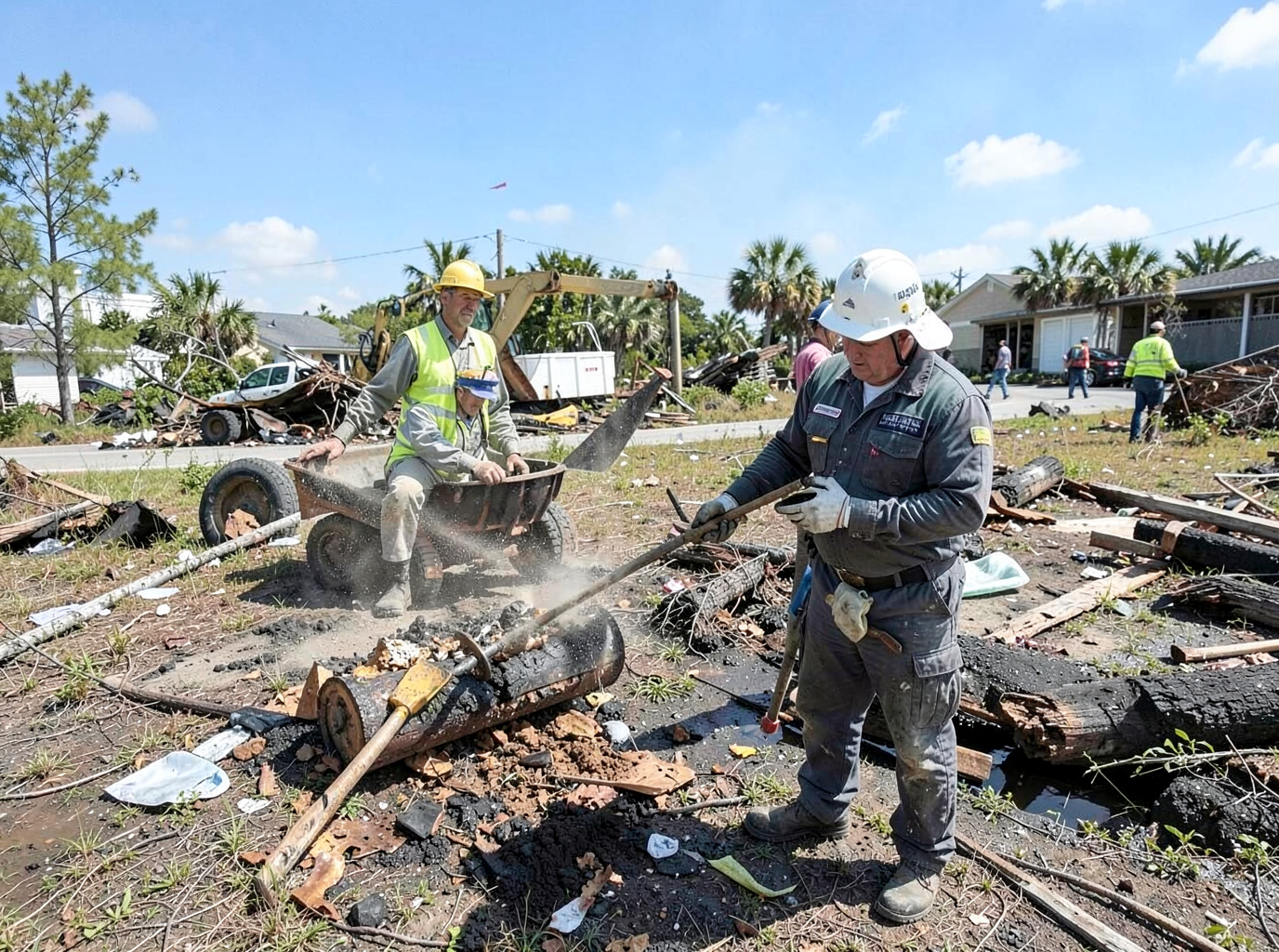
Flood cleanup is needed whenever floodwater has reached the inside of a property. Common situations include:
- Standing floodwater indoors after a storm, or after a canal or river event has pushed water over the ground and into the building.
- Silt and debris lines on walls, cabinets, floors and door frames, marking where the water stood.
- A garage or lanai flood that reached the living space through a doorway, a threshold or a connecting wall.
- The pattern that follows the event, where the water has receded but the problem has not. Carpets still hold water, drywall is soft at the base, and a grey film sits on hard surfaces.
Many owners wait for the water to drain before calling, and that is understandable. Receded water, however, does not mean a clean property. Materials that soaked up floodwater can keep moisture and contamination inside walls and under floors long after the visible water is gone. Silt that dries on a surface can look clean while still holding residue and moisture, and a grey film can return as humidity rises in the weeks after an event. Owners who wait often find that the floor looks dry while the wall cavity behind it is still damp, sometimes for weeks. That is why a surface that looks dry is not evidence that the materials beneath it are dry. A flood that enters through a garage can look minor at the door but spread quickly into hallways, closets and the base of interior walls, so the reach of the water matters more than the room where it first appeared.
Safety comes first. If outlets, panels, appliances or electrical equipment have been in contact with floodwater, keep clear of them until they have been assessed, and do not switch on anything that may have been submerged. Keep children and pets out of affected rooms, and do not handle standing water while assessment is pending. This is reasoning from the nature of floodwater, and it does not replace a professional assessment.
If any of these situations apply to your property, call Florida Water Damagesolution to arrange the visit before materials are moved or removed.
3. How the Work Runs
1. Call and assessment
The first step identifies where the water came from, how far it reached, and which rooms and materials are involved. The damage is documented as found, with photographs taken before anything is moved, removed or cleaned. That record is the starting point for the work and for any later documentation, as explained in Section 5. To begin, call Florida Water Damagesolution to start the assessment.
2. Contaminated water removal
Floodwater and silt are extracted using handling suited to contaminated water, not the approach used for a clean supply-line leak. Crews set up pumps and extraction units at the lowest point of each room, work toward the doorways, and check the floor after each pass for standing water. The equipment stages of extraction and water removal are covered on our water removal and extraction page.
3. Material decisions
Porous materials that floodwater touched are removed. These include drywall to the flood line and above where wicking shows, insulation, carpet and its pad, and particleboard. Hard surfaces such as tile, sealed concrete and solid wood are retained for cleaning where they can be cleaned properly. Each decision is recorded against the room and the flood line so the removal can be traced back to the evidence found on site.
4. Cleaning and sanitation
Surfaces being kept are washed down and then treated. Debris is removed from the structure and from the work area. Cleaning follows a set sequence so that contamination is not simply moved from one surface to another. Work moves from the highest surfaces downward, so drips do not re-contaminate finished work, and wash water is kept out of clean rooms.
5. Handover to drying
Once the water and the unsalvageable materials are out, the moisture state of the structure is recorded. Readings are taken at set points in each affected room, and the drying crew receives them with the room layout and the list of materials removed. Structural drying then begins, as covered on our structural drying and dehumidification page. Drying is linked to cleanup, not a separate job that starts from scratch later.
6. Close-out
The owner receives the documentation: photographs, the extent of the damage and the scope of work. Each photograph is labelled with its room, its water line and its material, and dated, so the file can be read without the crew present. These records give a clear account of the property for a City permit file or an insurance file. What the City or an insurer decides from them is outside the control of this business, and no outcome is promised.
4. What's Inside This Service
Contaminated water and silt removal
Contaminated water and silt removal is the extraction stage for floodwater. It differs from a plumbing event here because floodwater is not simply wet. It has crossed soil, roads and yards, and it leaves silt behind as it drains. A burst supply line usually delivers water that started clean.
This block is needed whenever standing water or thick silt is present indoors after a flood, and it comes before every other stage. The water is removed with equipment and techniques suited to contaminated water, with protective handling for the crew and containment to stop the spread into clean rooms. Silt is taken out as a material rather than only mopped, because it holds moisture and residue against surfaces.
Cost is shaped by the depth of water, the amount of silt, the number of rooms reached and the access available for equipment.
Flood-line material removal
Flood-line material removal is the flood cut and the removal of what floodwater has soaked. The flood line is the height at which water stood or wicked into a material, and it is marked by staining, tide-lines of silt, swollen board and a change in texture. It is set by moisture and contamination evidence found in the building, not by guesswork about how high the water seemed to reach.
What comes out usually includes drywall to the flood line and above where wicking shows, insulation, carpet and its pad, particleboard, and the bottoms of cabinetry where moisture has entered. Flooring systems are assessed piece by piece, because some hard surfaces can be cleaned and others cannot. Cutting above the line is done to remove wet, contaminated material and to give the structure room to dry, not as a standard height.
Cleaning and sanitation of salvageable surfaces
Cleaning and sanitation of salvageable surfaces covers tile, concrete, solid wood and fixtures that floodwater touched but did not ruin. These surfaces can usually be kept, but only after they have been washed down to remove silt, grease and debris. The wash-down comes first, because a treatment applied over silt does not reach the surface beneath it.
Antimicrobial treatment follows as its own step, applied once the surface is clean and has been allowed to reach the condition the work requires. Solid wood that has swollen or lost its structure is flagged for removal rather than cleaned for appearance.
This block is needed after the water and unsalvageable materials are out, and before the structure is handed to drying. Its cost depends on how many hard surfaces are involved, how much silt they carry, and how many fixtures need attention.
Documentation after a flood
Documentation after a flood is the record of the event as it was found: photographs, water-line evidence and scope notes. It is taken before materials are moved or thrown out, because the condition of the property at that moment is the evidence. Photographs show where the water stood and what was present, while notes record measurements, affected rooms and the materials marked for removal.
This matters in Cape Coral because the City's substantial damage and substantial improvement process asks the applicant for photographs, and those photographs play a critical role in how the damage is judged. A property that has been cleaned before it was documented may leave the owner with a weaker record. Owners are also helped by a clear written scope, so each photograph can be tied to a room and a material. Section 5 explains the framework in full.
5. Flood Cleanup and Cape Coral's SI/SD Framework
The City of Cape Coral participates in the National Flood Insurance Program, and its high-risk flood zones are labelled AE and VE. Under the City's substantial damage and substantial improvement (SI/SD) checklist, substantial damage is damage of any origin, where the cost of restoring the building to its pre-damage condition equals or exceeds 50% of its pre-damage market value.
Once a structure has incurred substantial damage, any repairs are treated as substantial improvement, whatever the actual repair work turns out to be. A substantially damaged or substantially improved building must then be brought into full compliance with the floodplain requirements for new construction, including the lowest floor and lowest machinery elevation at or above the minimum required elevation.
The market value used in the calculation is the market value set by a qualified independent appraiser within 12 months, or the Lee County Property Appraiser's value adjusted to market. Condominium owners must provide an appraisal. The SI/SD application is part of the building permit submittal, filed with the City of Cape Coral. The applicant's photographs play a critical role in the determination and must be provided by the applicant.
This is why cleanup sequencing matters in practice. What is removed and photographed during cleanup becomes part of the record the City may review. Where this framework may apply, documentation should come before disposal: photograph the damage as found, record the water line and the affected materials, and keep notes before anything is thrown out.
The determination is made by the City of Cape Coral, not by the contractor. Florida Water Damagesolution cannot promise the outcome of any application. What the business can do is document the property clearly and completely, so the owner has the evidence the City asks for. Call Florida Water Damagesolution to describe what happened before any materials are removed.
For the wider storm sequence, including how water enters through wind and roof damage, see our storm damage restoration page. For local context, see our Cape Coral page.
6. What Flood Cleanup Costs Depend On
No single price applies to flood cleanup, because the work depends on what the water did to the property. The main factors are:
- Area and depth flooded. A few rooms with shallow water are a different job from a whole floor under water. Water that has stood for longer soaks deeper into materials, which widens the scope of removal.
- Silt and debris load. Heavy silt means more extraction, more material removal and more cleaning time.
- How much material is unsalvageable. Porous materials that floodwater has soaked are removed, and the volume of that removal shapes the job.
- Contamination handling. Floodwater needs protective handling and containment, and that adds to the scope. Silt and soaked contents that are moved without containment can spread contamination into rooms that were clean.
- The drying scope that follows. The structure must be dried after cleanup, and the size of that work depends on the moisture found.
- Whether SI/SD compliance reshapes the repair phase. If the City's substantial damage rules apply, repair may become a compliance project with its own requirements, which changes the scope that follows cleanup.
Costs can also change once walls are opened, because hidden wet material can only be seen once it is exposed.
The honest starting point is assessment. The extent of the flood is documented first, and the scope is explained to the owner before work proceeds. Florida Water Damagesolution will walk through what is needed and why, so the owner understands the work before it begins. This page describes how cleanup costs are reasoned about, and it does not state a price.
7. Questions People Ask
Is floodwater treated differently from a burst-pipe cleanup?
Yes. A burst pipe usually releases water that started clean, so the early handling is often simpler. Floodwater has crossed soil, roads, yards and whatever else lay in its path, so it is treated as contaminated from the first extraction pass. That affects the protective handling, the containment, which materials can be kept and how surfaces are cleaned. The category of water is confirmed at the assessment, and the handling is set from that finding.
What has to be thrown out after a flood?
Porous materials that floodwater has soaked usually cannot be cleaned effectively. In most cases that means drywall to the flood line and above where wicking shows, insulation, carpet and its pad, and particleboard. Cabinetry bases can also be affected where moisture has entered. Hard surfaces such as tile, sealed concrete and solid wood are kept where they can be properly cleaned, and solid wood that has swollen or lost its structure is flagged for removal. Each decision is made on the evidence found in the building.
Why is everything photographed before cleanup starts?
Photographs record the property as the flood left it, and in Cape Coral that record matters. The City's substantial damage process asks the applicant for photographs, and they play a critical role when a repair is measured against the building's market value. Once materials are removed or thrown out, that evidence cannot be recreated. Photographs show water lines, affected rooms and materials, and they are paired with notes on scope so the record is clear.
Can a flooded home be cleaned without removing drywall?
Sometimes, but often not. Where water has wicked above the floor line and insulation is wet, removal is usually the standard outcome, because the drywall has taken up moisture and possibly contamination that is not practical to clean back to a sound condition. Wet insulation holds water inside the wall where drying cannot reach it. The answer depends on the water line, the moisture findings and what the wall contains, so removal is assessed case by case rather than assumed.