When You Need It
Water removal is needed when water is sitting inside a building where it should not be. The most obvious sign is visible standing water on any floor. Other signs are less obvious but just as important. Carpet that feels saturated when you press it, grout lines in tile that look wet or are weeping, and laminate or engineered flooring that is lifting or buckling all point to water that has moved beyond the surface.
Water can also come down from above. A stain spreading across a ceiling, water dripping through a light fixture, or a wet wall below an upstairs bathroom or a roof leak means water has travelled through the structure. Water entering through a roof or an upstairs source often reaches the lower floor by a route that is not obvious, so the stage starts with finding where the water is.
Garages and lanais can also be a problem. A flooded garage or lanai can carry water toward the living space through a door sill, a threshold, or a shared wall. Water at a threshold rarely needs to pour over the sill. It can build up at the door, seep under a worn seal, and spread across the tile toward the living room. Once water reaches the living area, the job is larger. After a storm, water inside the home is a clear reason to call, even if the amount looks small.
The urgency comes from how water behaves. Water moves downward with gravity and spreads sideways across flat surfaces. It also soaks into porous materials, a process called capillary action, which draws water into drywall base, carpet pad, baseboards, and subfloor. A saturated drywall base or carpet pad keeps holding water after the surface looks dry, and that water can move into the surrounding structure. This is why the material underneath matters as much as the floor you can see. Materials that stay wet for longer are more likely to need drying, and some will need removal. Removing the bulk water first limits how far the water travels into the structure. This is reasoning about how water moves, not a claim about how fast damage happens. Each property is different, so the assessment is what sets the scope.
How the Work Runs
Every job follows the same sequence. The steps below describe how Florida Water Damagesolution approaches the removal stage, from first contact to handover.
1. Call and assessment
The first step is a call to describe the situation. Tell us where the water is, what it appears to have come from, and whether it is still coming in. Safety comes first. Standing water near electrical outlets, appliances, or light fixtures is a hazard, and water that may be contaminated should be kept clear of until it has been assessed.
2. Source control
Active water must be stopped before or alongside removal. A running leak makes extraction pointless, because the floor will keep refilling. Wherever possible, the supply is shut off or the leak is isolated first, and only then is the water already on the floor taken up, since pumping onto a floor that is still being fed only repeats the work. Where the source is hidden inside a wall, a slab, or a supply line, the work moves to leak detection so the source can be found without guesswork.
3. Bulk removal
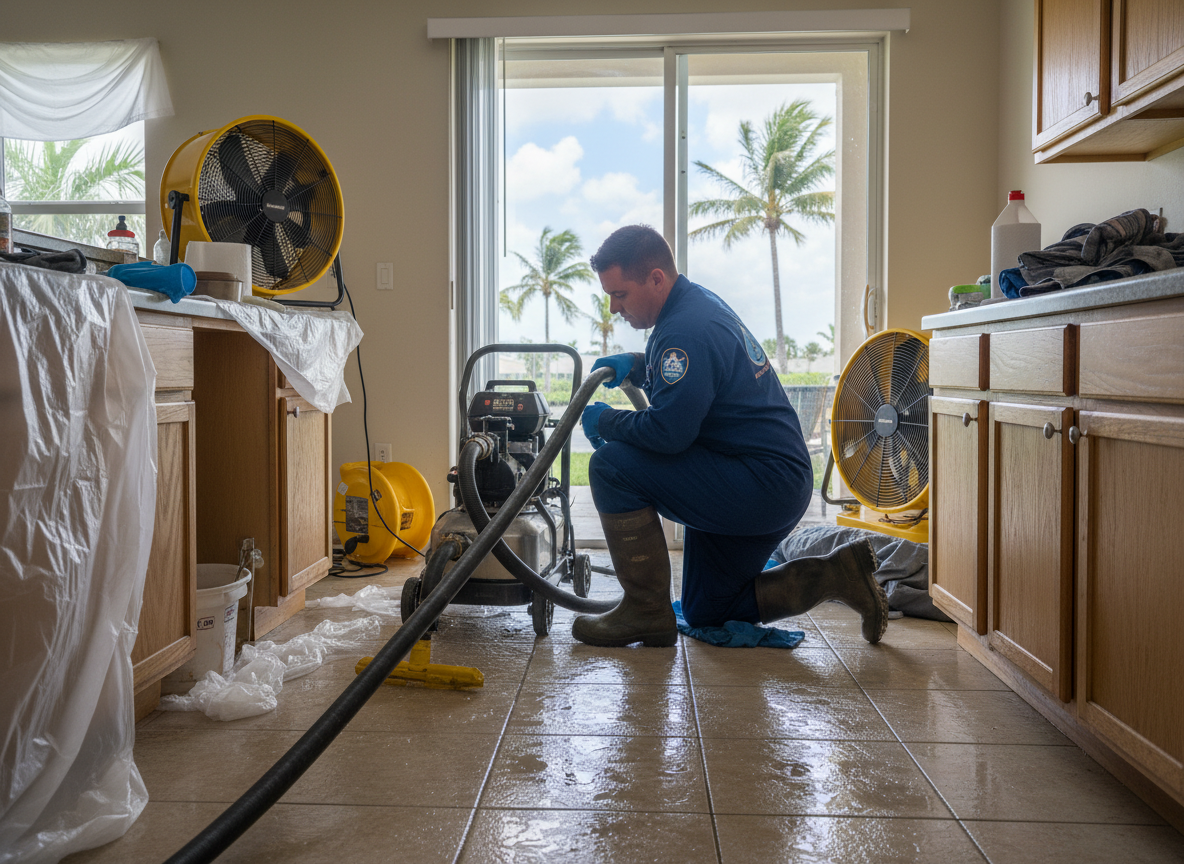
Standing water is pumped or extracted first. The equipment is matched to the depth of the water and the surface it sits on. Submersible pumps suit shallow pooling, while truck-mounted units suit deeper water across a large area, and the choice also depends on the flooring. Matching the equipment early keeps the crew from working the wrong surface first. Shallow water on hard flooring is handled differently from deep water across a large area or water spread over carpet.
4. Extraction from materials
Once the bulk water is gone, carpet, pad, and hard surfaces are extracted with passes of the equipment. Furniture and contents are moved or protected so that the work can reach the floor beneath them.
5. The decision point
Some materials can be dried in place. Others cannot. Saturated pad and certain materials do not come back to a usable state, and that is a matter of how the material behaves when wet, not a sales point. The technician explains which items can be dried and which are likely to be removed, so the owner understands the decision before drying starts. Drying and restoration work then continues under water damage restoration.
6. Handover
The moisture state of the affected areas is recorded before the stage ends. The drying stage then begins, covered on the page at structural drying and dehumidification. The record shows where the water was, what was removed, and what readings were taken at handover. Handover documentation also gives the owner a dated set of photographs and readings to keep with the home's records.
What's Inside This Service
Water removal and extraction is made up of four parts. Each one depends on the type of water and the surfaces involved.
(a) Standing-water removal
Standing water is water that sits on a floor or other surface and has not yet soaked in. Removing it is usually the first task on site, because standing water left on the floor can soak into materials. Submersible pumps handle shallow pooling, and truck-mounted extraction handles deeper water and larger areas. A flooded room and a flooded structure need different approaches, and the crew sets up for whichever applies. In a single room, the work centres on the floor, the doorway, and the surfaces the water has touched. When water has moved through walls, ceilings, and subfloors, the assessment must also account for water inside the structure, not just the visible pool. What drives the cost here is the depth of the water, the floor area it covers, and how difficult it is to reach.
(b) Portable extraction and material extraction
Portable extraction uses wands, weighted extractors, and hand tools to draw water out of carpet, pad, and hard flooring. Once the bulk water is removed, carpet and pad still hold moisture. Extraction passes pull that water up through the fibres and out of the pad. Overlapping passes make sure no strip is missed. Hard surfaces such as tile, vinyl, and sealed wood are cleared of standing film and checked for water beneath or along the edges. Whether saturated pad can be dried in place is decided at the step 5 decision point above. Some materials, including particleboard and soaked insulation, do not come back to a usable state. What drives the cost is the surface area, the material type, and how much of the pad or subfloor is affected.
(c) Water categories at the removal stage
Water is grouped by how contaminated it is. Clean water comes from a source such as a supply line. Grey water carries some contamination, such as water from a dishwasher or washing machine. Category 3 water, often called black water, includes sewage and floodwater that has moved through contaminated ground or materials. The category changes the first pass. Storm-driven water that has crossed contaminated ground is Category 3, so the protection described below applies from the first pass. Clean water can often be extracted with standard equipment. Category 3 water calls for more protection for workers, more care about what the water touches, and a stricter plan for disposing of affected materials. Sewage is a specialism with its own process, covered at sewage cleanup. What drives the cost here is the category, since it changes the protection and disposal steps.
(d) Contents and surface protection
Furniture, rugs, electronics, and belongings near the water are moved, blocked, or protected before extraction starts. Heavy items are lifted onto blocks or moved out of the affected room where access allows. Smaller items may be packed or wrapped, and valuable pieces are photographed before they are touched. Surfaces that stay in place are protected from equipment, foot traffic, and drip. Throughout the stage, the water's reach is recorded with photographs and moisture readings. These records show the extent of the water as found and the condition of the room at that moment. Owners often need this record later for their own files or for a City of Cape Coral permit after a flood event. What drives the cost is how many items must be moved, how much of the home is affected, and how much documentation is needed.
Removal After Flooding in Cape Coral
Flood water is different from plumbing water. When water enters a Cape Coral building from a flood event rather than a pipe, the repair that follows can fall inside the City's floodplain framework. The City participates in the National Flood Insurance Program. Its Flood Insurance Rate Maps mark high-risk areas as "AE" and "VE." If a building in those areas has sustained substantial damage, the City's process applies.
Substantial damage means damage of any origin, including flood, where the cost of restoring the building to its pre-damage condition equals or exceeds 50% of its pre-damage market value.
The City asks the owner for a substantial improvement and damage application, which is part of the building permit submittal. The City's checklist states that photographs of the building play a critical role and must be provided by the applicant. That is why the documentation made during removal matters. During removal, the crew photographs each affected room as found, before equipment or contents are moved, so the starting condition is on record. The water's extent is noted room by room, including where it reached walls, doorways, and flooring, and moisture readings are taken at marked points and logged against their location. That record can be handed to the owner or their contractor, who can use it when the SI/SD application is prepared. Photos taken as found, and records of the water's extent, can become part of the paperwork the owner gives the City. Florida Water Damagesolution does not file this application for the owner. The owner or their contractor deals with the City, and the removal records are one input to that process. Keeping the photographs dated and labelled by room makes them easier to match to the application.
Plumbing removals do not carry this permit narrative. This section applies to flood events. For more on repairs after a flood, see water damage restoration and the Cape Coral service area page.
What Water Removal Costs Depend On
Cost depends on the factors below. Each job is different, and the assessment is what identifies which factors apply.
- Volume and depth of water. Shallow pooling is handled differently from deep water across a large area. Depth decides which equipment can reach the water.
- Area and surfaces affected. The floor area, the number of rooms, and the material types all change the work. Each surface holds water differently, so equal areas can need different work.
- Water category. Clean, grey, and Category 3 water each require different protection and handling. The category decides the protection the crew uses and how materials are handled.
- Extraction versus bulk pumping. A job that is mostly pumping differs from one that needs extensive extraction from carpet, pad, and subfloor. Extraction works through material, so the split changes how much of the job is still ahead.
- Access. Upper floors, tight crawl spaces, and narrow structures take more time and equipment to reach. Tight access can limit which equipment fits and how the work is sequenced.
- Unsalvageable material removal. Whether removal of saturated pad or other materials is included changes the scope of the job. Removal decisions shape what the owner must replace, so they matter to planning.
The honest process point is this. The water's extent is assessed and documented first, and the scope is explained before the stage proceeds. The owner sees what has been found and what the work involves before the next step begins. Florida Water Damagesolution does not promise a figure at this stage. The assessment is what makes the scope clear.
Questions People Ask
What is the difference between water removal and water extraction?
Water removal and water extraction describe the same first stage of the job. Removal refers to taking standing water, including storm-driven water, off the floor and out of the room, usually with pumps and truck-mounted equipment. Extraction refers to drawing water out of carpet, pad, and other materials, usually with wands and weighted extractors. Both happen during the same visit, and both must be finished before drying can work well. Florida Water Damagesolution covers both under one service on this page, so the owner does not need to choose between them.
Can carpet and padding be saved after flooding?
Carpet can sometimes be saved if it is extracted quickly and the pad beneath it is dry enough to allow drying in place. Pad is the critical part. Saturated pad often cannot be dried in place and usually needs to be replaced. Some materials do not come back to a usable state once they are soaked. The decision is made at the handover point, after the assessment has shown how far the water has reached. The technician explains which items can be dried and which are likely to be removed before the drying stage begins.
How is sewage-contaminated water handled differently during removal?
Sewage-contaminated water is Category 3 water and is handled with more protection and a stricter plan from the first pass. Workers need more protection, and the area is kept clear of people who should not be there until it has been assessed. Materials that the water has touched are treated with more care and are more likely to be removed. The disposal steps also differ. Sewage cleanup involves containment and sanitation as the first steps, not just extraction. The sewage process is covered on the page at sewage cleanup.
What should I do while waiting for water removal to start?
Start with safety. If you can stop the source safely, such as closing a valve for a leaking appliance, do so. Keep clear of standing water near electrical outlets, appliances, and light fixtures. If you can switch off power at the breaker without standing in water, do so. If you cannot reach the breaker safely, leave it and call for assessment. Keep away from water that may be contaminated. Photograph the water and affected areas as found, before moving anything. Those photographs record the water's extent and may be needed later, including for flood paperwork.