Water Damage in Cape Coral
Florida Water Damagesolution helps Cape Coral homeowners, condo owners, and property managers when water has already entered a building and the next decisions cannot wait. We are located at 4958 Sorrento Ct, Cape Coral, FL 33904. Call Florida Water Damagesolution to describe what happened, where the water is now, and what has been affected.
Cape Coral is a city built around water. It had 236,264 residents in 2025, up 21.8% since 2020, and it sits on the Caloosahatchee River with more than 400 miles of freshwater and saltwater canals running through its neighborhoods. For many properties here, water is part of the landscape as much as the weather. Canal edges, drainage routes, and storm rain all shape where water travels when something goes wrong indoors.
That shape changes how damage behaves. A slow leak can travel under flooring or along a slab before it shows on a wall. Storm rain can find openings that held fine last season. And because most Cape Coral homes are owner-occupied, the owner is often the first to find the damage, the one who approves the work, and the one who deals with City paperwork if the repair is large. This page explains those local conditions, the rules that follow from them, and the services that cover each stage.
Water in a Cape Coral property can also arrive from several directions at once. Plumbing, air conditioning drain lines, appliance hoses, storm openings, and water from outside the building are different sources that call for different checks. Naming the source early helps the crew, and it helps you, because the answer shapes whether the job is a cleanup, a drying job, or a rebuild.
Cape Coral's Water Risks
Four drivers shape water damage risk in Cape Coral. Each one comes from the city's own published information or from the National Hurricane Center's regional record, and each one affects how a property should be checked.
The canal system. Cape Coral has more than 400 miles of freshwater and saltwater canals. Canals move water across the city, so a property with canal frontage, or a neighbor who has one, sits closer to the paths water takes. Canal geography is the reason the city's flood conversation is never only about rainfall.
The mapped floodplain. The City participates in the National Flood Insurance Program, and its mapped high-risk areas carry the zone labels AE and VE. Whether a particular property lies in one of those zones is a question for that property's own flood map record, not a general assumption. What matters for water damage is that a damaged building in these zones falls under the City's substantial damage rules, covered in Section 5.
Storm and surge exposure. Hurricane Ian made landfall on Cayo Costa, Florida, on 28 September 2022, at 130 knots, as a Category 4 storm, according to the National Hurricane Center's report on the storm. The report describes catastrophic storm surge along the Southwest Florida coast, including the Caloosahatchee River. Ian is the regional reference point for this coastline. It is not a measure of any single Cape Coral address.
The year-round plumbing and cooling baseline. Water damage in a home is not only a storm problem. Supply lines, drain lines, water heaters, appliance hoses, and air conditioning condensate lines run all year. Because they operate every day, a small failure can run for weeks before anyone sees a stain. That is process reasoning rather than a statistic, and it is why leak checks matter in Cape Coral as much as storm planning does.
What This Business Does in Cape Coral
Florida Water Damagesolution covers the stages of water damage work for Cape Coral properties, from removing standing water through repairs and mold work. Each service has its own page, so you can go straight to the stage you are in. This section only summarizes them. The detail sits on the service pages.
- Water Damage Restoration: end-to-end restoration of a water-damaged property, covering the full sequence, from first response to finished repair.
- Water Removal & Extraction: getting standing water out of the building, the first physical stage of the response.
- Water Damage Repair: rebuilding what water damaged once the building is dry, including the permit side and the paperwork that goes with it.
- Mold Remediation: removing mold growth and correcting the moisture source behind it, with containment during work.
- Mold Inspection: assessing a property for mold and documenting what is found in a written report.
- Storm Damage Restoration: water intrusion from storms, wind-driven rain, and surge aftermath, including openings left by wind damage.
- Flood Damage Cleanup: cleanup after floodwater has entered a building, including removal of wet materials.
- Sewage Cleanup: backups and other Category 3 water, handled through containment, removal and sanitation in the affected rooms.
- Structural Drying & Dehumidification: drying the structure itself and verifying the result with moisture readings.
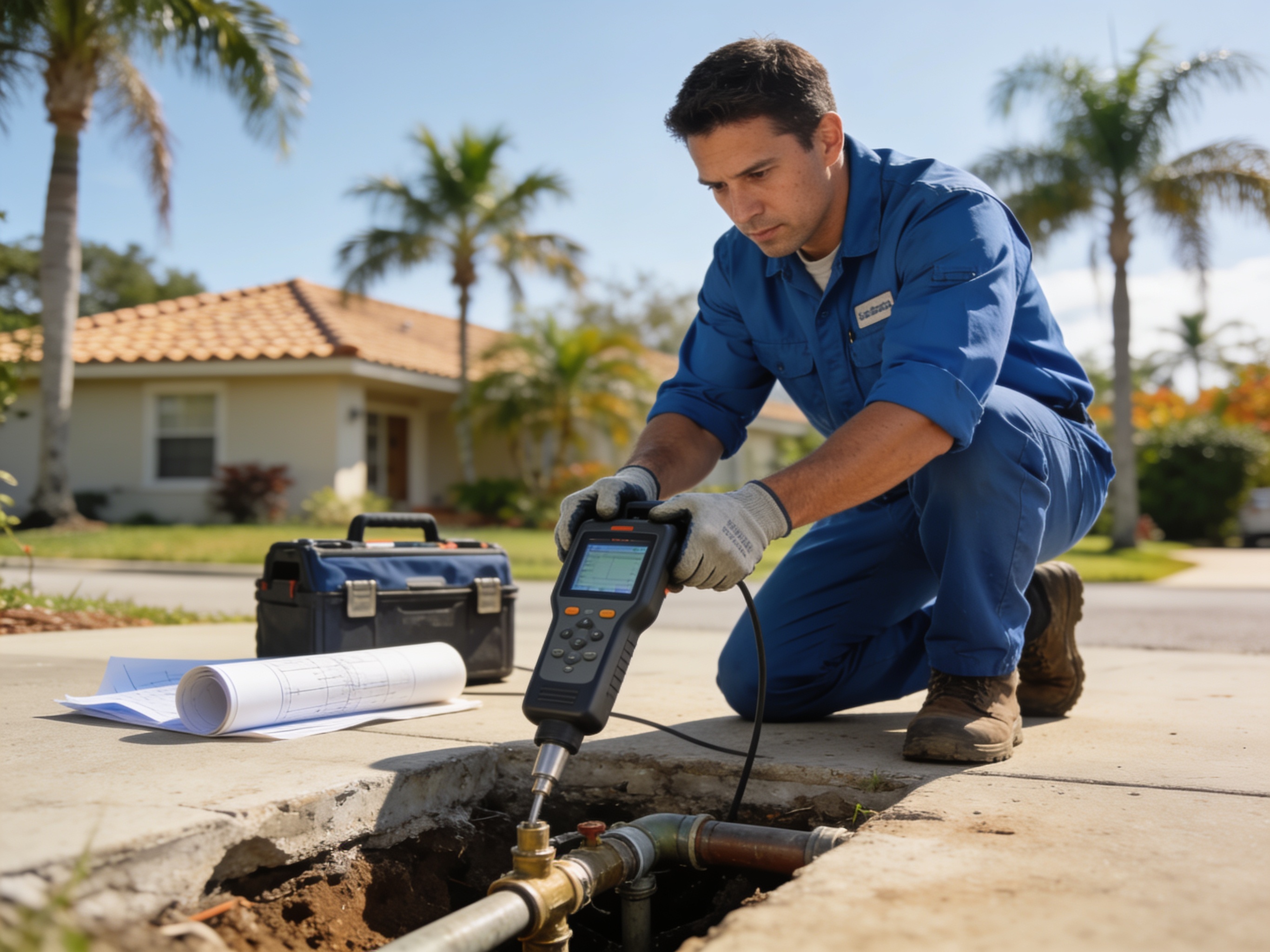
- Leak Detection: finding hidden supply and drain leaks, and pinpointing where the water comes from in the building.
Not sure which stage you are in? Describe what you can see, and call Florida Water Damagesolution to sort it out.
Cape Coral Local Facts
A City Built on Canals
Cape Coral has more than 400 miles of freshwater and saltwater canals, and the city is bordered by the Caloosahatchee River and Matlacha Pass. That geography shapes flood exposure in two ways. Water can rise in the canal system and move into neighboring lots, and the canal network also gives water many routes into a home that have nothing to do with the roof or the street. For an owner, the practical question is where water is most likely to enter. That is worth establishing early, before cleanup begins, so the drying plan and any later repair reflect the real path. A canal-side property and an inland property can have very different entry points, and the same storm can produce different damage across the city.
The 50% Rule
Cape Coral applies the FEMA 50% rule through its floodplain process. Under the City's checklist, substantial damage means damage of any origin where the cost of restoring the building to its pre-damage condition equals or exceeds 50% of its pre-damage market value. Once a structure is substantially damaged, any repairs count as substantial improvement, whatever the actual repair work. The building must then meet full new-construction flood requirements, including the lowest floor and lowest machinery elevation at or above the minimum required elevation. For a property owner, this means the repair scope itself can trigger a compliance project. The first question becomes how the restoration cost compares with the building's value, and that question should be answered before the scope is finalized.
A Still-Growing City
Cape Coral had 236,264 residents in 2025, up 21.8% since 2020, living in 82,914 households of 2.59 persons each. Most homes are owner-occupied, at 77.2%, and 25.0% of residents are 65 or older. Growth at this rate means a large share of households have arrived recently, and many are meeting the city's flood paperwork for the first time after a water event. Owner-occupancy means the person who finds the damage usually also decides whether to repair it, and carries the cost and the paperwork. Older residents may need clearer written steps and more time to review options. Taken together, these figures point to demand that comes mostly from homeowners who need a plain explanation of the process before they can approve it. That is why this page explains the City's permit steps in Section 5, and why each service page describes its stage in plain terms.
The Paperwork Inside the Permit
Cape Coral's substantial damage determination is not a separate form that arrives later. The SI/SD application, which includes an affidavit and a worksheet, is part of the building permit submittal. To complete the worksheet, the building's market value must be established. That can come from a qualified independent appraiser's actual cash value determination dated within 12 months, or from the Lee County Property Appraiser's value adjusted to approximate market value. Condominiums are different. County values are not currently available for condos, so a condo owner must provide an appraisal. The applicant also supplies photographs of the building, which the City says play a critical role in the determination, and those photographs become part of the record the determination rests on. In practice, the paperwork starts with the first images taken.
Permits and Paperwork After Water Damage in Cape Coral
When water damage is large enough to trigger the City's substantial damage process, the owner has to assemble the evidence before the permit file can move forward. The process begins with the damage itself. The cost of restoring the building is compared against its pre-damage market value, and that comparison decides whether the repair is treated as substantial improvement.
Owners should expect to provide an SI/SD application, with its affidavit and worksheet, filed as part of the building permit submittal. They also need a market value source. A qualified independent appraiser can provide an actual cash value determination dated within 12 months. Alternatively, the Lee County Property Appraiser's value can be used once it is adjusted to approximate market value. A condominium owner should plan for an appraisal from the start, because county values are not currently available for condos.
Photographs are the part most often underestimated. The City's checklist states that photographs play a critical role in the determination and must be provided by the applicant. Take them at first discovery, before anything is moved, cut out, or cleaned. Capture each affected room wide and close, including water lines on walls, damaged flooring, and equipment. Keep the original files with their dates. Photos taken after cleanup cannot show what the building looked like when the water arrived.
Jurisdiction matters too. Incorporated Cape Coral permits through the City, and that is where the SI/SD application belongs. The unincorporated communities around the city, including North Fort Myers, Matlacha, San Carlos Park, and Iona, run through Lee County Community Development. The county Permit Center lists Storm Damage Repair under Emergency Permitting. An owner whose property sits in one of those communities should confirm which side of that line the address falls on before filing. This section explains how the process works. It does not mean Florida Water Damagesolution files permits or secures approvals for anyone.
Calling From Cape Coral
Florida Water Damagesolution is located at 4958 Sorrento Ct, Cape Coral, FL 33904. We are inside Cape Coral, so the canal, flood rule, and permit topics on this page are the ones we work from. Call Florida Water Damagesolution to arrange a visit or to describe what is happening.
When you call, have a few things ready. Tell us where the water is, which rooms and floors it has reached, and whether you know its source, such as a supply line, a storm opening, or a sewer backup. If you have taken photographs, keep them on your phone so you can describe what they show. If the property has canal frontage, or you already know its flood zone or permit history, mention that too. None of this has to be perfect. A clear description helps the first conversation go further.
If you are unsure which stage applies, call Florida Water Damagesolution to describe what happened, and we will point you to the right service page.
FAQ
What is the FEMA 50% rule in Cape Coral?
The 50% rule is the FEMA substantial damage test, and Cape Coral's floodplain process applies it. If restoring a building costs 50% or more of its pre-damage market value, the building is substantially damaged, whatever the cause. Once that happens, any repairs count as substantial improvement, and the building must meet full new-construction flood requirements, including the lowest floor and lowest machinery elevation at or above the minimum required elevation. Confirm the City's current checklist before planning a repair.
How do I evidence my home's market value for a substantial-damage determination?
The City accepts two sources. One is a qualified independent appraiser's actual cash value determination dated within 12 months. The other is the Lee County Property Appraiser's value, adjusted to approximate market value. The difference matters for condominiums. County values are not currently available for condos, so a condo owner must provide an appraisal. Ask the appraiser to state the date and basis of the value, and keep that document with the SI/SD application.
Why do photographs matter before cleanup starts in Cape Coral?
The City's checklist says photographs of the building play a critical role in the substantial damage determination and must be provided by the applicant. Photos taken at first discovery show the building as it was when the water arrived, before drying, removal, or cleanup changes it. Start with wide shots of each affected room, then add close-ups of water lines, damaged finishes, and the source if it can be seen. Date the images, keep the original files, and note what each one shows. Cleanup removes evidence, so those images cannot be recreated later.
Who handles permits for water-damage repairs, the City or Lee County?
It depends on where the property sits. Incorporated Cape Coral permits through the City, and the SI/SD application is part of the City's building permit submittal. Unincorporated communities around the city, including North Fort Myers, Matlacha, San Carlos Park, and Iona, permit through Lee County Community Development. The county Permit Center lists Storm Damage Repair under Emergency Permitting. Confirm the jurisdiction for your address with the correct office before filing, because the paperwork and contacts differ.